

Sciatica commonly occurs when one of the nerve roots contributing to the sciatic nerve becomes irritated, inflamed or compressed. Treatment depends on what is contributing to the symptoms and how they are affecting movement and function. That’s where chiropractor care can help.
Our chiropractors can assess your symptoms, identify likely contributing factors and determine whether conservative chiropractic care is appropriate. With the right approach, it may be possible to address the source of the problem and improve your quality of life.
Sciatica describes a group of symptoms that occur due to issues with the sciatic nerve. So, it’s not a single condition.
The sciatic nerve is formed from nerve roots in the lower spine. It travels through the buttock and down the leg. When a nerve root becomes irritated, it can cause symptoms along this pathway.
Sciatica symptoms can include:

Pain travelling from the lower back or buttock into the leg
Weakness in the leg
Burning or shooting pain
Numbness
Tingling or pins and needles
You may also have lower back pain at the same time.
The symptoms you feel due to sciatica can originate from several causes. Figuring out which one is behind your pain and discomfort can define the treatment strategy.
The discs between the bones of your spine act as cushions. A disc can bulge or herniate and irritate a nearby spinal nerve.
When this affects a nerve root that contributes to the sciatic nerve, it may cause sciatica symptoms. A disc problem is one of the common causes of this condition.
Spinal stenosis is narrowing around the spaces where spinal nerves pass. This can reduce the space available for the nerves.
Spinal stenosis is more common with age. However, since symptoms and their causes can vary, it’s not correct to assume that stenosis is responsible for your pain.
Age-related changes in the spine, as well as changes related to movement or previous injuries, can sometimes contribute to irritation around a spinal nerve.
These changes don’t always cause symptoms. Accordingly, a comprehensive assessment is necessary before deciding that they are at fault.
Not all pain that travels into the leg is sciatica. Muscles, joints, and other structures can also cause painful symptoms. Some conditions (e.g., Piriformis Syndrome or Sacroiliac (SI) Joint Dysfunction) can also produce sciatica-like symptoms.
A chiropractor can contribute to the conservative management of sciatica symptoms. The right approach depends on the cause of your symptoms and their severity.
At Wholistic Health Centre, treatment is always personalised. Depending on your needs, your care may include:
The goal is to help you manage your symptoms and build your ability to return to normal activities gradually.


A proper assessment helps your chiropractor understand what you are experiencing and then decide whether chiropractic care can work for you. Your chiropractor may ask about:
The chiropractor may also decide to assess your lower-back and hip movement. They’ll look at your strength and check how you perform relevant activities.
This helps create a full picture of what may be contributing to your symptoms. It also helps determine whether another type of assessment is more appropriate than chiropractic care.
At Wholistic Health Centre, we always take a personalised approach to care. It involves several steps.
The first step is understanding your symptoms. Your chiropractor will consider where your pain travels and discuss which symptoms bother you.
This assessment helps determine the next treatment steps. It can also help our team understand whether you need something else besides chiropractic care. In some cases, they may recommend assessment by your GP, a medical specialist or another healthcare practitioner.
When symptoms are painful, the focus may initially be on movements you can comfortably tolerate.
You may receive advice on how to modify certain activities while continuing to move as much as possible. Staying active and continuing normal activities within your capabilities can form an important part of managing sciatica.
As your symptoms allow, suitable exercises and rehabilitation activities may become part of your care.
Exercises can be adjusted as your symptoms and physical capacity change.
Reducing pain is only one part of recovery. The next part is getting back to normal activities. Our team can support your gradual return to work and exercises.
Sciatica and lower back pain can occur together. However, they may not have the same cause.
Some people experience both lower back pain and symptoms that travel into the leg. Others may have little back pain and mainly notice symptoms in the leg.
At Wholistic Health Centre, your chiropractor can assess your symptoms to understand whether sciatica is the only condition responsible for your pain.


Most cases of sciatica aren’t caused by a serious condition and tend to improve over time. However, some symptoms require urgent medical assessment. They include:
Healthdirect advises seeking medical care immediately if you have problems controlling your bladder or bowels or develop numbness around the genital or anal area. These symptoms can indicate a serious problem that needs urgent assessment.
Where appropriate, your care may involve collaboration with your GP, physiotherapist, exercise physiologist, remedial massage therapist or medical specialist. Our team can help determine when another form of assessment or treatment should form part of your care.
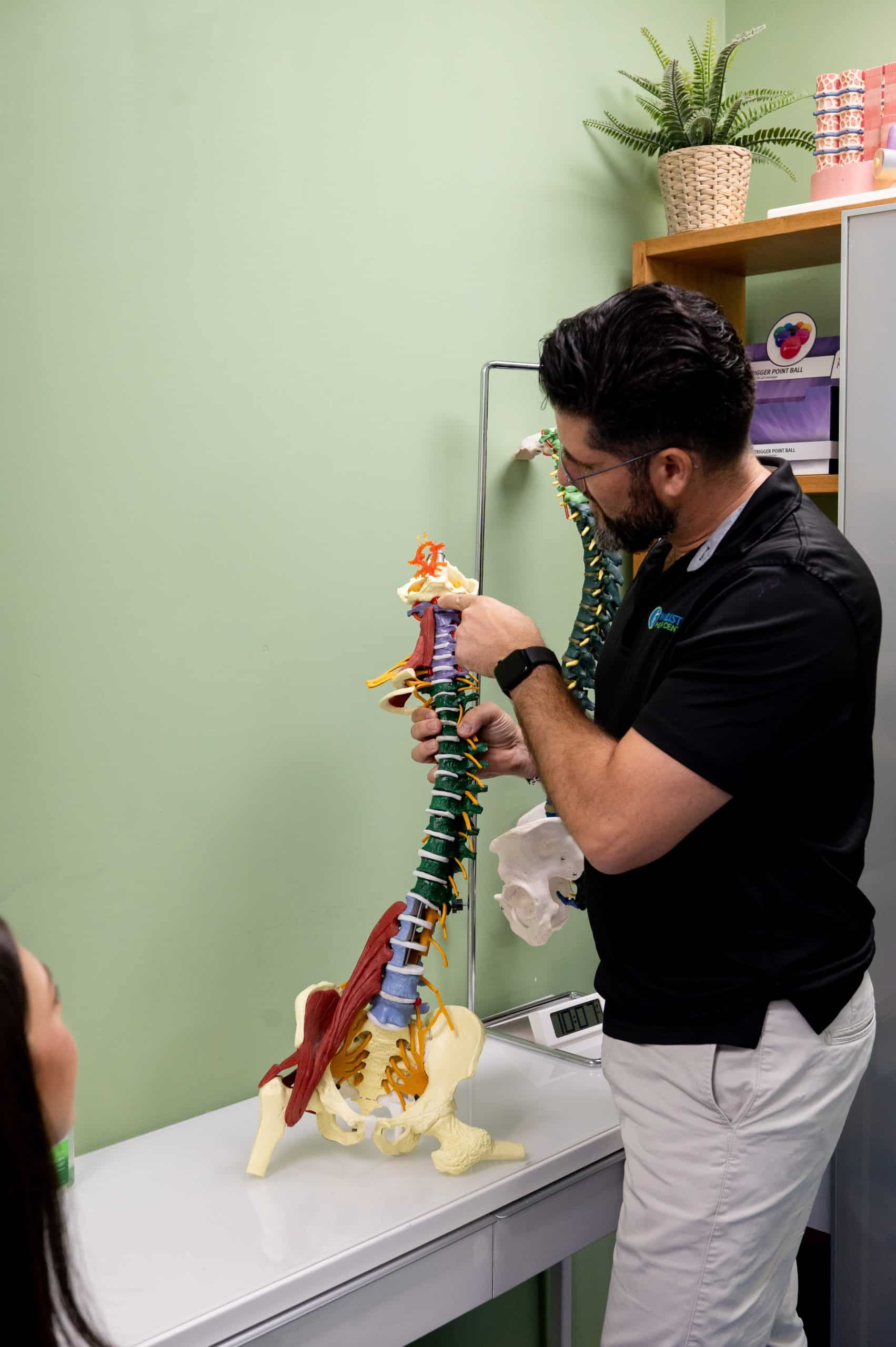
Chiropractic care may form part of conservative management for some people with sciatica. For others, a broader approach involving exercise rehabilitation, medical management or multidisciplinary care may be appropriate.
Sciatica commonly causes pain that travels from the lower back or buttock into the leg. You may feel tingling, pins and needles, numbness, or weakness. Because several conditions can cause similar leg symptoms, a clinical assessment is useful to determine whether your symptoms are consistent with sciatica and whether further investigation is required.
Many cases of sciatica improve over several weeks to a few months. The recovery time can vary depending on the cause and the individual.
In many cases, gentle movement and exercise are part of recovery. Your activity should be appropriate for your symptoms and increased gradually.
Walking can help you stay active while managing sciatica. Start with an amount you can comfortably tolerate and increase your activity as your symptoms allow.
Not automatically. Imaging is not routinely recommended for every person with sciatica. It may only be needed when there is a clinical reason for it.
Yes. A bulging or herniated disc in the lower back can irritate a nearby spinal nerve and cause sciatica symptoms.
See a doctor if your symptoms are getting worse or aren’t improving. Seek urgent medical care if you develop bladder or bowel control problems, numbness around the groin or anal area, or rapidly worsening weakness.
Located in Wolli Creek, Miranda, Kareela and Hurstville, we proudly serve patients across the Sutherland Shire, St. George region, and Inner West

Hurstville Wholistic Health Centre

Kareela Wholistic Health Centre

Wolli Creek Wholistic Health Centre
Hurstville Wholistic Health Centre
Kareela Wholistic Health Centre
We are happy to answer any questions you might have about starting care at our clinic. Find your closest clinic location and start your wellness journey today.