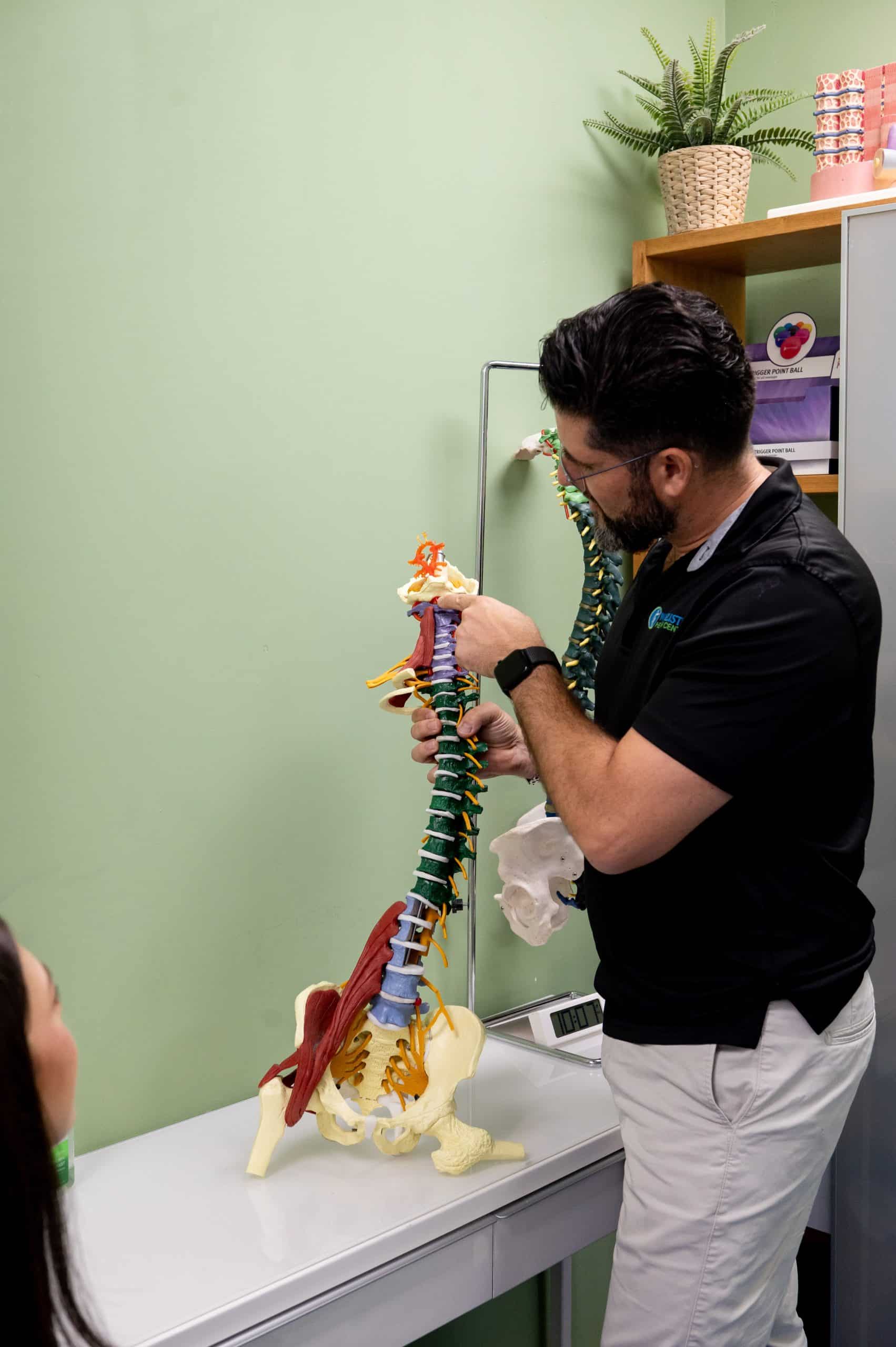
Wholistic Health Centre provides exercise physiology services for people who are recovering from workplace injuries. We offer therapy and treatment under the NSW workers’ compensation system. As part of the personalised rehabilitation program, you can improve strength and mobility while returning to functional capacity. Our exercise physiology programs are designed to support a gradual return to everyday activities and work-related tasks, based on your current capacity and rehabilitation goals.
The treatment programs under WorkCover are created in full coordination with the patient. We collaborate with your treating doctor and insurer if required.
The service is available at our Miranda clinic for the Sutherland Shire and southern Sydney.
How Exercise Physiology Can Support Your WorkCover Recovery
Recovering from a workplace injury is often a comprehensive process. In addition to treating injuries, you may also need to rebuild the physical ability to complete everyday activities.
Exercise physiology uses structured exercise and gradual physical conditioning as part of this rehabilitation process. While each program is different, common elements can include:
Rebuilding strength
Restoring confidence in movement
Improving mobility and physical capacity
Increasing tolerance for everyday tasks
Managing persistent pain
Supporting return to work
A physiologist creates a program based on what you need most. For example, someone returning to an office role will have very different physical demands from a warehouse worker.
Progress is also gradual. The treatment involves building capacity at a careful pace.
The timing and intensity of active rehabilitation will differ depending on the type of injury, your symptoms, current work capacity and recommendations from your treating team
Exercise physiology may be introduced at different stages of recovery. An Accredited Exercise Physiologist can use structured strengthening, mobility and conditioning exercises that are appropriate for your current function and gradually progress them as your capacity changes.
Your treatment history, symptoms, work demands and response to exercise all help determine when rehabilitation should begin and how quickly it progresses.
Exercise physiology may be appropriate for a range of work-related musculoskeletal injuries. Whether it is suitable depends on your diagnosis, stage of recovery and recommendations from your treating team.
Conditions and situations where exercise physiology can be useful include:
Back, neck, shoulder and knee injuries
Restoring confidence in movement
Soft-tissue injuries
Persistent musculoskeletal pain
Repetitive strain injuries
Reduced strength
Reduced mobility
Physical deconditioning after an extended period away from work
For example, a worker recovering from a back injury may need to rebuild trunk and lower-body strength. Someone recovering from a shoulder injury may need to improve loading tolerance before performing repeated reaching tasks.
Exercise physiology isn’t the right option for all workplace injuries. Your treating doctor and healthcare team can help determine whether active rehabilitation is appropriate for your situation.
Many workers need time to rebuild their ability to tolerate the physical requirements of their role.
A return-to-work exercise physiology program considers the movements you perform during a normal working day. These may include:
Lifting and carrying
Pushing and pulling
Prolonged standing or walking
Physical endurance
Bending and reaching
Specific strength requirements
Repetitive movements
Your exercise physiologist can use this information when deciding which exercises to include in the program. These can change when you start showing improvements.
Progress depends on how your body responds. Exercise difficulty, resistance, repetitions and duration can always be adjusted.
What to Expect from Your WorkCover Exercise Physiology Program
At Wholistic Health Centre, WorkCover rehabilitation is a comprehensive process, consisting of:
Initial Assessment
Your first appointment includes a review of your injury and current physical capacity. Your exercise physiologist may also discuss your symptoms, relevant medical history, previous treatment and the requirements of your job.
They can also perform movement, strength and functional testing. This provides a starting point that can be compared with your progress later in the program.
Personalised Exercise Program
Your exercise program is developed according to your assessment results and rehabilitation goals.
It may include:
Strength exercises
Mobility work
Cardiovascular conditioning
Functional movements
Exercises can also be selected to address physical tasks that are relevant to your occupation.
The program should challenge your body appropriately without expecting you to perform at your pre-injury capacity immediately.
Progress Reviews
Your physical capacity can change throughout your recovery. Regular reviews help your exercise physiologist understand what needs more work. After the review, our team adjusts the treatment program accordingly.
Communication With Your Treatment Team
WorkCover rehabilitation often involves more than one person. Your nominated treating doctor, insurer and other healthcare professionals may all be involved.
Where appropriate, your exercise physiologist can communicate relevant progress and treatment information with members of this team.
Using WorkCover for Exercise Physiology in NSW
If you meet the requirements, your exercise physiology can be funded through the NSW workers’ compensation system. Treatment arrangements depend on your claim, referral, stage of treatment and SIRA requirements.
For Accredited Exercise Physiology, the usual process is:
Workplace injury → workers compensation claim → referral from your nominated treating doctor → initial assessment → rehabilitation plan →treatment
Before exercise physiology treatment begins, you need a referral from your nominated treating doctor.
The Accredited Exercise Physiologist providing treatment through the NSW workers’ compensation scheme must also hold the appropriateSIRA approval.
Insurer pre-approval is required for some treatment and services. However, SIRA also allows certain treatment to proceed without prior insurer approval in specified circumstances. Your Exercise Physiologist can determine whether approval is required for your situation and communicate with the insurer where necessary.
If you’re unsure what documentation you need, contact Wholistic Health Centre before your first appointment. Our team can explain what documentation we require to get started.
Allied Health Treatment Request (AHTR)
Where treatment approval is required, your Exercise Physiologist may submit an Allied Health Treatment Request (AHTR) to the insurer. The AHTR outlines your current function, rehabilitation goals, proposed treatment, expected timeframes and anticipated outcomes.
It can also be used during ongoing treatment to communicate your progress and request further treatment or services where required.
Why Choose Wholistic Health Centre for WorkCover Rehabilitation?
At Wholistic Health Centre, rehabilitation focuses on your individual injury, movement and practical recovery goals.
Our approach includes:
Treatment from a SIRA-approved Accredited Exercise Physiologist for NSW workers compensation claims
Individual exercise and rehabilitation programs
Focus on functional and return-to-work goals
Gradual progression
A multidisciplinary allied health environment
Communication with other healthcare professionals (where appropriate)
Our exercise physiology service is available at our Miranda clinic in the Sutherland Shire. Wholistic Health Centre also provides a broader range of allied health services across its Sydney clinics.
Do I need a referral for WorkCover exercise physiology?
Yes. Under the NSW workers’ compensation scheme, an Accredited Exercise Physiologist requires a referral from your nominated treating doctor before treatment can begin.
Contact us before booking if you aren’t sure whether you have the correct referral.
Is your Exercise Physiologist SIRA-approved?
Yes. Our Exercise Physiologist is SIRA-approved and can provide exercise physiology services to eligible patients with NSW workers compensation claims.
Does WorkCover cover exercise physiology?
Exercise physiology may be funded as part of a workers’ compensation claim when the treatment is considered reasonably necessary. You must also meet the relevant eligibility requirements.
Since coverage depends on your individual claim, you shouldn’t assume that the insurer will automatically cover each procedure.
Do I need approval from my insurer before my first appointment?
You should confirm the claim and treatment arrangements before beginning exercise physiology. SIRA recommends checking that the claim has been accepted and that the insurer agrees the treatment is reasonably necessary.
Our team can discuss what information is required before your first appointment.
What should I bring to my first WorkCover exercise physiology appointment?
To your first appointment, please bring:
Referral from your nominated treating doctor
Your workers’ compensation claim insurer details.
Relevant medical reports
Please wear comfortable clothing since assessment usually involves movement.
How can an exercise physiologist help me return to work?
An exercise physiologist can build a rehabilitation program around your current physical capacity and the requirements of your job.
This may involve improving strength, mobility and endurance. As your recovery progresses, the physiologist will adjust the program accordingly.
How long will WorkCover fund exercise physiology treatment?
There isn’t one standard treatment period that applies to every worker.
The duration depends on factors such as your claim eligibility, clinical needs, progress and insurer approval. If you need more sessions, your exercise physiologist can review your progress and provide treatment information to the insurer.
Can I see an exercise physiologist if I am already seeing a physiotherapist?
In some cases, you may. Some workers receive care from more than one allied health professional when there is a clear clinical reason.
Your treating practitioners and insurer may need to consider whether concurrent treatment is appropriate.
Can exercise physiology help if I have been off work for several months?
It may be suitable if time away from work has reduced your strength, endurance, mobility or confidence with physical activity.
An exercise physiologist can assess your current capacity and develop a gradual reconditioning program.
We are happy to answer any questions you might have about starting care at our clinic. Find your closest clinic location and start your wellness journey today.