

Sports injuries, recurring pain and restricted movement can make it difficult to train consistently or return to your usual level of activity. Whether symptoms develop after a specific injury or gradually through repeated training load, the right assessment and treatment approach can support a safer, more confident return to sport.
At Wholistic Health Centre’s Wolli Creek clinic, we work with recreational athletes and active people dealing with musculoskeletal pain, stiffness and movement restrictions. Our team takes an individual approach to assessing the factors contributing to your symptoms and developing a treatment plan that supports recovery, mobility and your return to activity.
A sports chiropractor can form part of this process by addressing joint and musculoskeletal issues that may be affecting how comfortably and efficiently you move.
You don’t need to be a professional athlete to suffer from injuries and discomfort training brings. If you are a person who enjoys an active lifestyle, you may get hurt. That’s why chiropractic care is designed for everyone who enjoys sports, and not just professionals.
Sports place repeated demands on your body. Even simple repetitive movements can put stress on your muscles and joints. This could lead to stiffness, reduced mobility, or recurring discomfort.
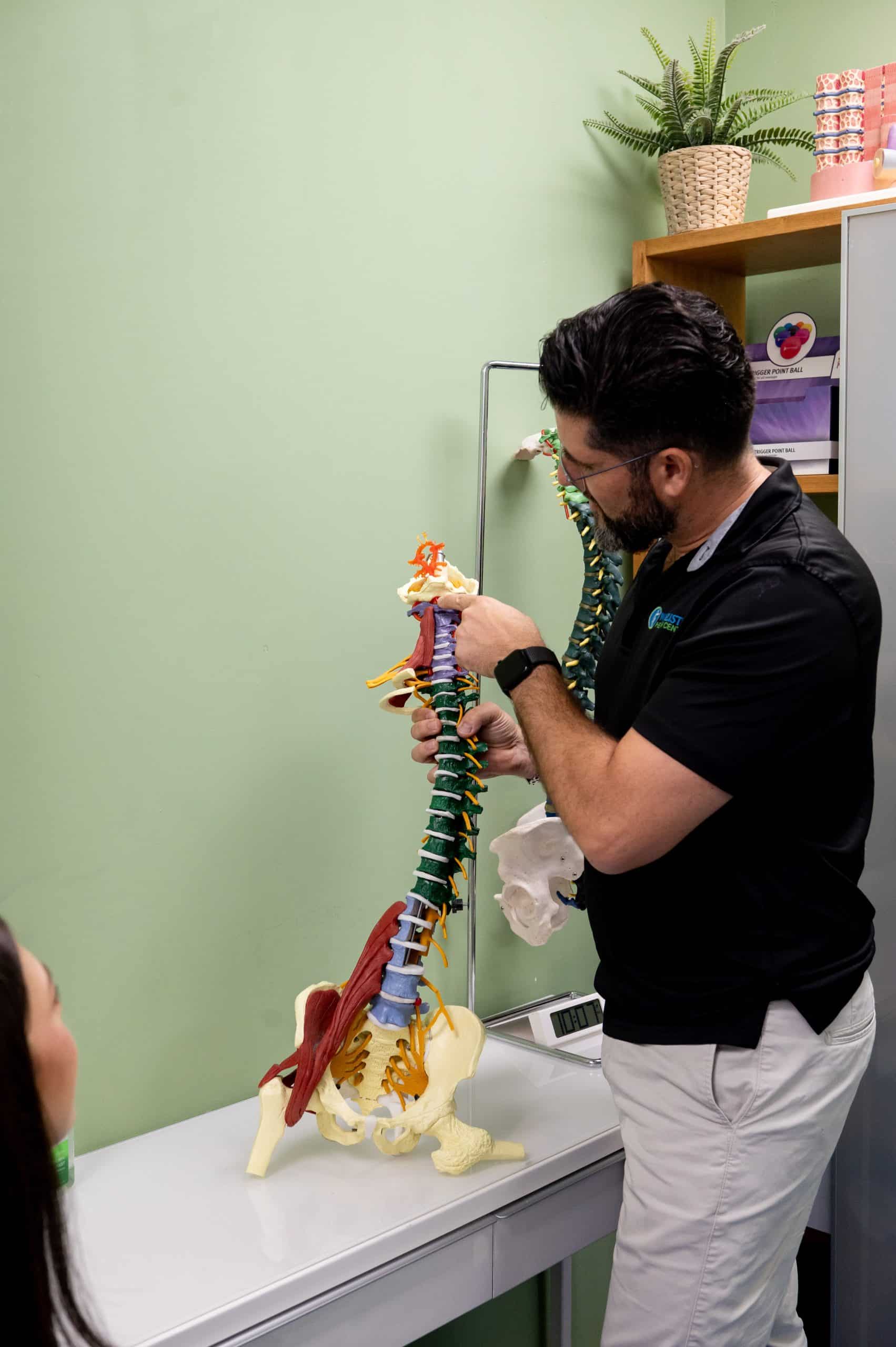
A sports chiropractor looks at how your body moves and studies how your activities affect your symptoms. This evaluation helps them create a treatment program that helps you stay active.
Regular sports activities can have an effect on different parts of your body. Some problems happen suddenly, while others develop gradually and remain unnoticeable for a while.
Back and neck discomfort can develop after lifting and repetitive training. More acute conditions occur when you make sudden movements during sport. You may notice stiffness after training or pain when turning.
A chiropractor can identify areas of restricted mobility or muscle tension.
Your shoulders are involved in many sports and gym exercises. Throwing, lifting, swimming, and other overhead activities can be highly stressful for that part of your body.
Restricted shoulder movement or recurring discomfort may affect your technique and make training harder. A chiropractor’s assessment can help identify factors that may be contributing to the problem.
Running, squatting, and other repetitive activities place significant demands on the hips and pelvis.
Pain in this area can also affect the way you move. Your chiropractor may assess hip mobility and surrounding muscle function to understand what your body needs to recover.
Knee pain is one of the most common issues for people in virtually any sport. Meanwhile, the knee does not work alone. Movement at the hip, ankle, and other parts of the lower limb can influence how forces are distributed during activity.
A chiropractor can assess these movement patterns and determine whether conservative chiropractic care is appropriate.
An ankle sprain can continue to affect mobility and stability even after the initial pain has eased. A chiropractor can assess lingering movement restrictions and, where appropriate, address them as part of a broader return-to-sport plan.
Many sports injuries and discomfort develop gradually. Repeated loading without enough recovery can contribute to discomfort. Your chiropractor can assess the symptoms and consider your recent training history when developing a care plan.
Some sports injuries need more than chiropractic care. Depending on your symptoms, you may need medical imaging, physiotherapy, specialist assessment, or another form of treatment.
The area that hurts is not always the only area that needs attention. Your body uses many joints and muscles together when you train. If one area has limited movement, another area may have to work harder.
Several factors can influence this process, including:
For example, limited ankle movement may change the way you squat. Reduced hip movement may also change how other joints handle the load.
This is the reason behind the need for complete assessments. The chiropractor considers how your body moves as a whole and incorporates that knowledge into individualised management and rehabilitation plan.


Your first appointment begins with a discussion about your injury and your usual activities. Your chiropractor may ask how the injury happened, when your symptoms started, and what activities make them better or worse.
They may also ask about your training schedule and how much recovery time you usually have.
The physical assessment can include:
Your chiropractor may also look at movements that are specific to your sport when this is clinically appropriate.
If your symptoms suggest that you need another type of assessment, your chiropractor can recommend appropriate referral.
Each sports injury is different because it depends on the way your body reacts to it. That’s why there isn’t a one-size-fits-all chiropractic care plan. Treatment may include several different approaches.
The specific technique depends on the area being treated and your individual presentation. Your chiropractor will explain the recommended approach before treatment.
Sports and exercise can place repeated stress on muscles and other soft tissues. Soft tissue therapy may be used to address areas of muscle tension or discomfort. The technique can be adjusted according to your comfort.
Your chiropractor may recommend mobility exercises or movement strategies that help you work on areas of restriction. These exercises can also support your return to normal activities.
Where clinically appropriate, your treatment may include dry needling or other therapeutic techniques.
Not every person needs these approaches. Your chiropractor will consider your symptoms and explain which treatment options may be appropriate for your presentation.
Your chiropractor may provide exercises that support mobility and gradual return to training. The program will depend on your starting point and the demands of your sport.
Reducing pain is only one part of sports injury recovery. Once symptoms begin to settle, the next step is restoring comfortable movement and gradually rebuilding the strength, control and capacity needed for your usual training or sport.
Returning too quickly to your previous training level can place more demand on recovering tissues than they are ready to handle. A structured progression can help you increase activity in a way that reflects how your body is responding.
The pathway may include:
Your chiropractor can help assess your progress and guide which movements and activities may be appropriate at different stages. This can also include advice around training load and modifications while you rebuild capacity.
The exact pathway will depend on the type and severity of your injury, your previous level of activity and the demands of your sport. Recovery is not always linear, so the plan may need to be adjusted as your symptoms, movement and physical capacity change.
Sports injuries can involve more than one factor, including joint mobility, muscle function, movement control, physical capacity and training load. Depending on your needs, recovery may involve input from different healthcare professionals at different stages.
At Wholistic Health Centre, chiropractic care can be coordinated with services such as remedial massage and rehabilitation support where appropriate. If your presentation requires another type of assessment or treatment, your chiropractor can also recommend referral to a suitable healthcare professional.
This integrated approach helps ensure that treatment remains appropriate to your injury, recovery stage and return-to-sport goals.

Our sports chiropractic service is available at the Wholistic Health Centre Wolli Creek clinic.
The clinic is convenient for active people living in Wolli Creek and nearby areas of the Inner West and southern Sydney.
We are always happy to see sports enthusiasts from:
We are always here to assess your condition and make treatment recommendations.
The goal of your first appointment is to understand whether chiropractic care can help you achieve your goals. You will meet with a chiropractor and discuss your injury-relevant medical history.
Your chiropractor will then perform a physical and movement assessment. This may include checking your joint mobility, muscle function, and sport-related movements.
After the assessment, your chiropractor will explain the findings in simple terms. You can then discuss your treatment and rehabilitation options.
If chiropractic care is appropriate, you will receive a personalised plan based on your symptoms and goals.
If your injury appears to require another practitioner or further investigation, your chiropractor can recommend an appropriate referral.

A chiropractor may help manage some sports-related musculoskeletal problems, including joint stiffness, reduced mobility, muscle tension, and some exercise-related pain.
Not always. Whether you should continue training depends on the type and severity of your injury. Your chiropractor can explain if you need to modify your training.
A sports chiropractor may be able to help identify movement restrictions, previous injury-related changes, or other factors that may be contributing to recurring symptoms.
Both chiropractors and physiotherapists can assess and manage musculoskeletal problems related to sport, but their training and treatment approaches may differ. Sports chiropractic care often focuses on joint function, movement restrictions and manual treatment, while physiotherapy commonly places greater emphasis on exercise-based rehabilitation, strength and functional recovery. There is overlap between the two professions, and some sports injuries may benefit from a coordinated approach involving both.
Yes. You don’t need to compete professionally to see a sports chiropractor. Sports chiropractic care can be suitable for recreational athletes and gym goers.
If you have severe pain, significant swelling, or a suspected fracture, seek appropriate medical assessment. Your chiropractor can also recommend referral when your symptoms fall outside their scope.
Located in Wolli Creek, Miranda, Kareela and Hurstville, we proudly serve patients across the Sutherland Shire, St. George region, and Inner West

Hurstville Wholistic Health Centre

Kareela Wholistic Health Centre

Wolli Creek Wholistic Health Centre
Hurstville Wholistic Health Centre
Kareela Wholistic Health Centre
We are happy to answer any questions you might have about starting care at our clinic. Find your closest clinic location and start your wellness journey today.